




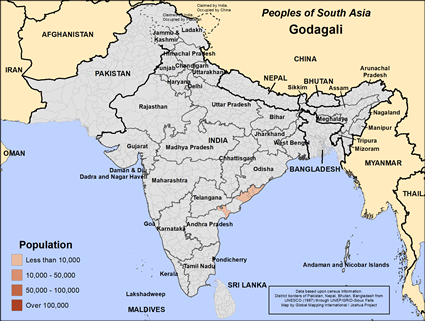
The Godagali people are found primarily in the Indian state of Karnataka and neighboring parts of southern India. They are traditionally associated with occupations connected to village labor, agriculture, and small-scale service work within rural communities. Their primary language is generally Kannada, though some may also speak regional dialects depending on where they live. Information about the Godagali is limited, but they are recognized as a distinct social community within the broader cultural setting of southern India.
Historically, many Godagali families lived in rural villages where life revolved around agriculture, seasonal labor, and local community relationships. Like many smaller caste-based communities in India, their social identity was shaped by hereditary occupations and longstanding village customs. Economic changes, migration, and modernization have gradually altered traditional lifestyles, leading some families into urban labor, transportation work, construction, and other forms of wage employment.
Despite these changes, family loyalty, cultural traditions, and community identity remain important among the Godagali. Their history reflects adaptation to changing social and economic realities while maintaining ties to local customs and regional heritage.
Many Godagali families continue to live in villages or small towns where agriculture and manual labor remain important sources of income. Men may work as farmers, agricultural laborers, construction workers, drivers, or daily wage earners, while women often manage household responsibilities and contribute to agricultural or informal labor when needed. Economic conditions vary, but many families face financial instability and limited employment opportunities.
Family relationships are central to community life. Extended families commonly maintain close ties, and marriages are generally arranged within the community. Social life often revolves around village events, festivals, weddings, and religious observances. Meals typically include rice, lentils, millet-based foods, vegetables, and dishes common to Karnataka and southern India.
Younger generations increasingly seek education and work opportunities in cities, though many still maintain strong connections to their ancestral villages and family traditions. In poorer communities, challenges such as limited healthcare access, educational barriers, and unstable income continue to affect daily life.
The Godagali are primarily Hindu and participate in religious traditions common throughout Karnataka and southern India. Their worship may include devotion to Hindu gods and goddesses, temple attendance, household rituals, and observance of regional festivals and ceremonies connected to family life.
In addition to mainstream Hindu practices, folk traditions and local religious customs may also influence spiritual life. Some families participate in rituals connected to ancestral reverence, village deities, blessings, protection from evil influences, or healing practices tied to local tradition. Religious identity is often deeply connected to family heritage and community belonging.
Very few Godagali have had a clear opportunity to hear the gospel explained from Scripture. In many places, there is little sustained Christian witness among them, and many remain unfamiliar with biblical Christianity and the message of salvation through Jesus Christ alone.
The Godagali people face both practical and spiritual needs. Many families struggle with poverty, unstable employment, limited educational opportunities, and inadequate healthcare access. Rural communities may also face challenges related to sanitation, infrastructure, and long-term economic security.
Spiritually, the Godagali remain largely unreached with the gospel. There is a need for faithful Christian workers who are willing to build long-term relationships, serve communities with humility and compassion, and clearly communicate biblical truth in culturally understandable ways.
Practical ministries involving literacy, vocational support, healthcare assistance, education, and family encouragement can help address real needs while also opening doors for meaningful gospel witness. Local churches and believers in southern India also need encouragement and biblical training to participate in reaching communities like the Godagali with the message of Christ.
Pray that the Godagali people would hear the gospel clearly and come to know Jesus Christ as Lord and Savior.
Pray for Christian workers to serve among the Godagali with wisdom, humility, compassion, and perseverance.
Pray that the Godagali people would be adopted through the People Group Adoption program so that ongoing prayer, outreach, discipleship, and future gospel engagement would continue among them.
Pray that believers in southern India would faithfully share biblical truth with the Godagali and demonstrate the love of Christ through both word and action.
Scripture Prayers for the Godagali in India.
https://www.peoplegroups.org/explore/GroupDetails.aspx?peid=45658
https://censusindia.gov.in
https://www.britannica.com/place/Karnataka-state-India
https://en.wikipedia.org/wiki/Kannada_people
| Profile Source: Joshua Project |



